



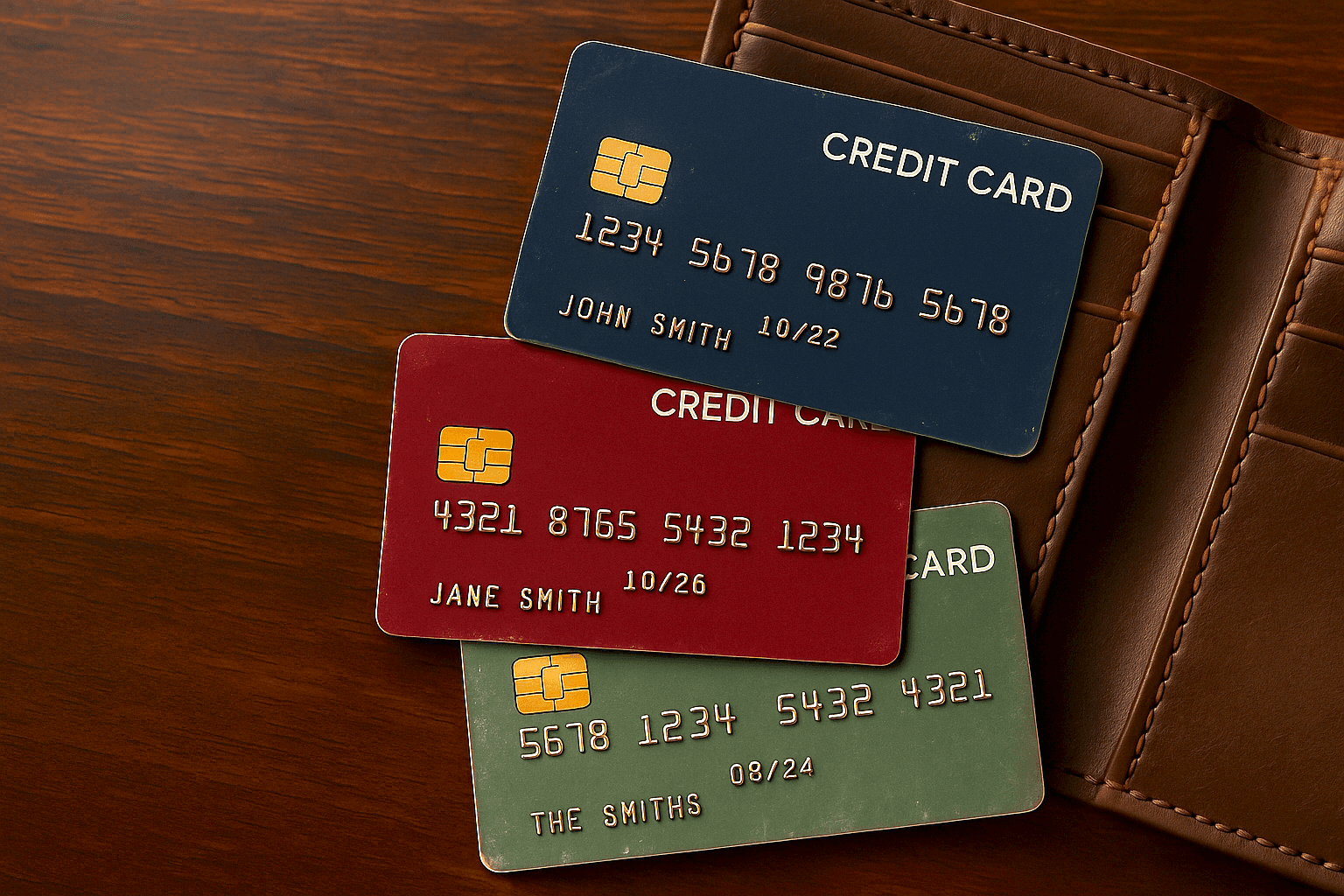

If you’re wondering how many credit cards a married couple should have, the answer is at least three.
Why? Because real-life moments—like a medical emergency, a travel hiccup, or an unexpected death—demand flexibility. A single card simply doesn’t cut it.
Why the Number of Credit Cards You Carry Matters—Especially for Couples
Many couples simplify their financial lives—and that’s usually smart. Shared goals, shared budgets, shared spending. But when it comes to credit cards, too much consolidation can create risk.
At Flip Flops and Pearls, we recommend that married couples carry at least three credit cards between them—and often more.
The Minimum Setup: Three Cards, Three Roles
One card in Spouse A’s name
One card in Spouse B’s name
One shared card for joint household expenses
This setup helps each partner build and maintain an independent credit history while sharing the rhythm of daily expenses. More importantly, it provides crucial backup in a crisis.
What Happens to Credit Cards When a Spouse Dies?
Here’s a scenario we’ve seen far too often: Grandpa passes away unexpectedly. All credit cards were in his name—or tied to his Social Security number. Within days, the accounts are closed. Grandma is left without access to credit, just when she needs it most:
Paying for funeral arrangements
Booking a flight to a new retirement community
Buying groceries or medications
This kind of disruption is avoidable—with the right credit setup in place.
Build Credit, Earn Rewards, and Create Flexibility
When used responsibly, multiple credit cards strengthen your financial foundation:
Maintain strong credit by keeping utilization low and showing on-time payment history
Earn rewards by using specific cards for groceries, dining, or travel
Stay flexible if a card is compromised or unavailable while traveling
Just be intentional with spending and pay balances in full each month. This isn’t about collecting cards—it’s about building a system that’s resilient and rewards-aware.
Diversify Your Banks and Networks
Just as you wouldn’t put all your investments into one stock, don’t rely on one card provider or network. Here’s how to diversify:
Use cards from at least two different banks (e.g., Chase and Capital One)
Use at least two different networks (e.g., Visa and Amex)
Avoid Discover for primary use—it’s less accepted overseas
This ensures that if one card or network goes down, you still have access to credit when it counts.
How to Make Credit Cards Work for Married Couples—Quietly and Reliably
Credit cards should work like a great assistant: reliable, invisible, and ready in an instant. A thoughtful mix ensures your finances are calm—even when life isn’t.
This isn’t just about plastic in your wallet. It’s about building peace of mind—and giving each partner the ability to act fast in emergencies.